
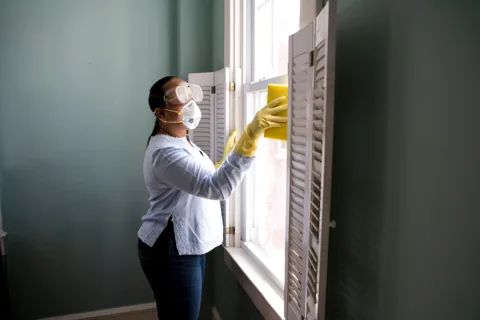
More in our window cleaning tips.
Dry debris first
Grit, dust and dead insects are easier to collect before they become wet sludge. Use a soft tool that fits the channel without scratching it or forcing parts apart.
Check the frame, track and access
Look at the window's material and care instructions. Aluminium, timber, uPVC and different coatings may need different products. Check for loose seals, corrosion, lifting paint or a damaged track before treating it as an ordinary cleaning job.
Open the window only as far as you can safely control it. Keep children away from the opening and avoid leaning outside to reach a corner. If access requires awkward climbing or reaching beyond a secure position, arrange suitable help.
- Use a soft brush, a vacuum with a suitable attachment and clean cloths.
- Have a small amount of the approved mild cleaning solution ready.
- Protect the sill and adjoining floor from drips.
- Identify visible drainage openings so they remain clear.
Cleaning window tracks, step by step
- Remove loose items. Clear the sill and move curtains or blinds out of the immediate working area without straining their fittings.
- Loosen dry debris. Gently brush the channel and corners. Work towards an area where the dirt can be collected.
- Vacuum carefully. Use an attachment that fits without scraping the finish. Do not force the nozzle into a narrow gap or pull at seals.
- Wipe the track. Apply the permitted solution to a soft cloth. Use controlled moisture rather than pouring liquid into the frame.
- Clean the corners. A soft brush or cloth around a blunt, suitable tool can help reach an accessible groove. Avoid sharp metal tools and do not push dirt into drainage openings.
- Remove cleaner residue. Use fresh water on a cloth as the care instructions require.
- Dry and check. Wipe up remaining moisture and check that the visible drainage route is clear.
Change cloths or rinse them as dirt builds up. Reusing the same muddy section of cloth spreads residue back along the track.
How to clean window sills and frames
Dust an accessible sill first, then wipe using the method for its finish. Keep moisture away from vulnerable timber joints and dry the edges. Painted surfaces need light pressure and a small test patch before a broader wash.
Wash the glass after the dirty frame work so debris does not land on a freshly finished pane. Our guide to cleaning windows without streaks explains the glass stage.
For removable insect screens, follow the joinery manufacturer's removal and cleaning instructions. Do not force clips, lift a screen outside an unsafe opening or assume every screen can be soaked.
Avoid flooding the track or damaging the finish
A vinegar-and-baking-soda recipe is not necessary for every track and may be incompatible with the surrounding materials. Use the joinery supplier's approved cleaner instead of relying on the bubbling reaction as evidence that dirt is being removed.
Keep metal scrapers, abrasive pads and strong solvents away from an unidentified coating. Do not spray lubricant into a mechanism as part of general cleaning; the window's instructions should specify whether, where and what lubrication is appropriate.
Drainage openings are designed to do a job. Keep their accessible entrances clear, but do not drill, widen or probe hidden channels. If water still pools or enters indoors after accessible debris is removed, seek joinery advice.
How often should window tracks be cleaned?
Check tracks when cleaning the windows and after periods that leave visible dust, insects or salt deposits. Follow the frame manufacturer's maintenance schedule, with particular attention to exposed coastal locations.
A quick dry pass can prevent a larger muddy clean later. Include accessible tracks in your spring cleaning plan and note any window that begins sticking or leaking.
Cleaning may help remove an obstruction, but it will not fix a bent track, worn roller or damaged seal. Stop forcing a window that does not move normally.
Agree tracks and sills in your window-cleaning scope
When requesting window cleaning in Wellington, say whether you want glass only or would like frames, sills and tracks discussed too. Describe the number of windows, storeys and internal or external access.
Photos of a tight channel, heavy build-up or awkward opening can help explain the work. We can then discuss the scope clearly before arranging the visit.
Your questions, answered
Can I pour water into a dirty window track?
Use controlled moisture on a cloth rather than flooding the frame. Remove dry debris first and follow the joinery manufacturer's cleaning method.
What should I use for narrow corners?
Start with a soft brush and an appropriately sized vacuum attachment. Avoid sharp tools and keep loosened dirt out of drainage openings.
Will cleaning fix a sticking window?
It may remove accessible dirt, but worn or damaged hardware needs repair advice. Do not force the window or dismantle it as part of a general clean.