More in our how to clean a house.
Start with the space you need to use
Prioritise food preparation surfaces, fresh spills and the sink. Choose a separate session for appliance interiors and storage, especially when food needs to be kept cold.
How to clean a kitchen without doubling the work
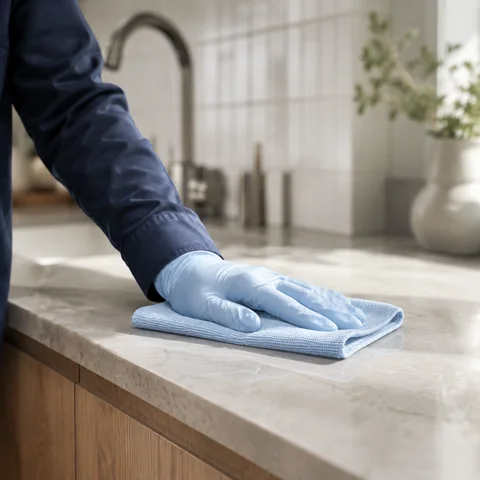
Put food away, wash or load dirty dishes and clear a section of bench for the work. Use clean cloths that have not been used in the bathroom. Remove loose crumbs before introducing water, and work towards the floor rather than cleaning it first.
Check the care instructions for stone, laminate, timber, painted cupboard doors and appliance finishes. Use products only on surfaces they are approved for. For food-contact areas, follow any rinsing requirement before food or utensils return.
- Have separate cloths for general surfaces and especially dirty areas.
- Keep food covered and away from cleaning products.
- Use the product's dilution and stated contact time.
- Never mix cleaning chemicals.
- Keep plugs, sockets and electrical components dry.
Daily kitchen cleaning list
Use these tasks as a starting point after cooking or at the end of the day. Adjust to what was used and deal with spills promptly.
- Put away food and clear dishes from the sink and bench.
- Remove crumbs and wipe food preparation surfaces with the appropriate method.
- Clean visible splashes from the cool hob and splashback using their care instructions.
- Wipe frequently handled areas where visibly dirty.
- Empty rubbish or food scraps as needed and keep the bin area clean.
- Clean the sink and taps, then remove standing water around the edges.
- Sweep or vacuum loose floor debris and spot-clean spills.
- Leave clean cloths ready for the next use and wash used cloths appropriately.
A short reset is easier when the bench has a clear place for everything. Leave the next cook a usable preparation space rather than relocating clutter to another surface.
Weekly kitchen cleaning checklist
Choose the items that apply to your kitchen. You can print this page from the browser and mark off the work.
- Check the fridge for leaking containers and food that needs using or discarding.
- Wipe cupboard fronts and handles using a finish-compatible method.
- Clean appliance exteriors, including handles and accessible controls as the manuals allow.
- Clean the microwave interior using its instructions, with the appliance safely isolated for manual cleaning.
- Check accessible splashback edges and corners for grease build-up.
- Clean the bin and let it dry before replacing the liner.
- Dust reachable shelves and ledges without moving heavy or fragile items unsafely.
- Vacuum floor edges, then damp-clean the floor using its approved method.
A busy family kitchen may need some of this work more often. A lightly used room may need less. Use visible condition and safe food preparation as your guide.
Plan a kitchen deep clean in separate jobs
| Job | Prepare first |
|---|---|
| Fridge interior | Arrange cold storage, empty the appliance and allow time for shelves to be washed and dried. |
| Oven interior and racks | Identify the model and lining, let it cool and follow its cleaning instructions. |
| Cupboards and drawers | Empty one section, check the finish and leave time for it to dry before restocking. |
| Rangehood filter | Check the removal, washing or replacement instructions for that filter type. |
| Behind large appliances | Plan safe access; do not pull an appliance against its electrical, gas or water connection. |
Follow the detailed guides for cleaning a fridge, cleaning an oven and cleaning kitchen cupboards. These jobs need more preparation than wiping the outside.
Avoid the shortcuts that leave damage or residue
More cleaner can leave more film. Start with the correct dose and a clean cloth, remove residue as directed and dry the areas that need it. Keep water out of cupboard joints and away from the edges of a vulnerable benchtop.
Do not use an acid-based recipe across an unidentified stone surface, or an abrasive pad on a delicate coating. If a stain remains after the approved method, pause before escalating to a stronger product.
This is a household checklist. A commercial food business needs its own food-control and cleaning procedures; a home routine does not replace those requirements.
Use the list when arranging a cleaner
Tell us whether you want a regular kitchen reset or a deeper home clean. Identify appliance interiors, cupboard interiors and any heavy grease separately, and explain what you will empty before the visit.
For a whole-home session, pair this with the bathroom checklist. A clear task list lets us discuss the work and provide a tailored quote without assuming every possible kitchen detail is included.
Your questions, answered
Should I clean the sink or floor first?
Finish the surfaces and sink before cleaning the floor. That way crumbs and splashes from the earlier work are collected in the final floor pass.
Are cupboard interiors part of a regular clean?
Agree that task when arranging the service. Interiors need emptying and drying, so tell us which cupboards you want included in the quote.
Can I print this kitchen checklist?
Yes. Use your browser's Print option to keep a paper copy and tick off the daily, weekly or deeper tasks that apply to your kitchen.